Why RFID labels are essential for brand protection
Counterfeiting and grey-market diversion are no longer occasional disruptions. They have become structural risks that spread quickly through global supply chains and online channels. In the UK, government and OECD analysis suggests that trade in counterfeit and pirated goods costs the economy around £9 billion a year and is associated with 80,500 job losses annually [1]. Border Force seizures have exceeded £500 million in retail value over just three years [2].
Fake or unauthorised goods create customer complaints, inflate service costs, disrupt authorised channels, and most painfully, undermine trust. When a counterfeit fails, consumers don’t blame the counterfeiter - they blame the brand on the product.
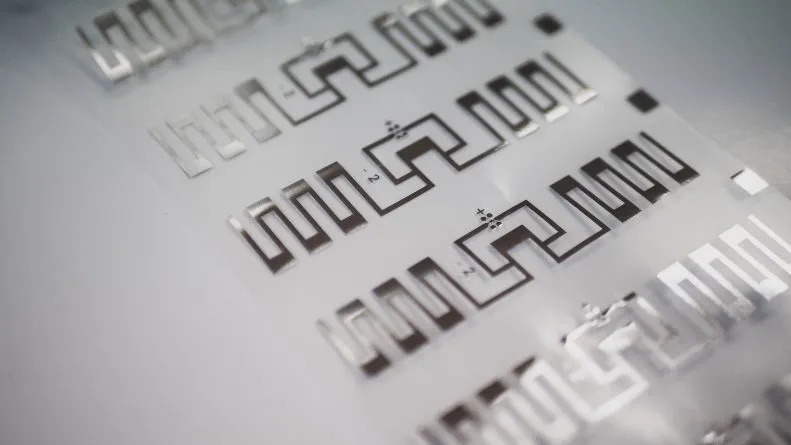
RFID (Radio Frequency Identification) labels provide a robust, scalable answer: they give each item a secure, unique identity that can be read automatically, without line-of-sight, anywhere in the supply chain.
Anti-counterfeit protection that safeguards margins and reputation
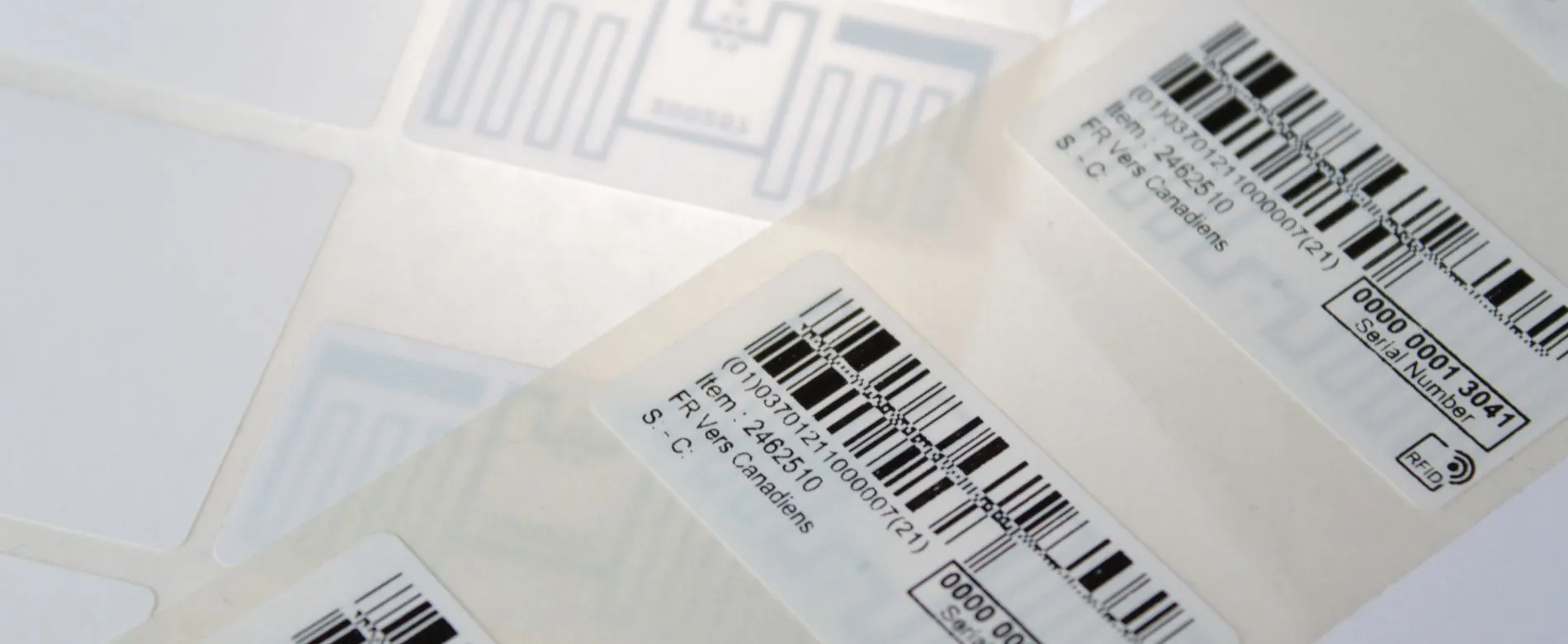
RFID labels use serialised identifiers, so each product leaves the factory with its own unique digital ID. When that ID is encoded securely and checked against a trusted database, copying or re‑using tags becomes extremely difficult.

This allows brands to spot and block counterfeits early at goods‑in, distribution centres, retail backrooms, service points, or during returns.
Brands in high‑risk segments such as luxury fashion, cosmetics and spirits report using RFID or NFC labels as part of multi‑layer security programmes to differentiate genuine products and reduce counterfeit incidence in key markets [3].
The value is both financial and reputational. Keeping fakes out protects genuine sales and avoids the hidden cost cascade that follows counterfeit incidents: additional customer support, unnecessary service interventions, chargebacks, and long-tail brand damage. Unauthorised consumables or components rarely meet original specifications, leading to breakdowns, inconsistent output, safety issues, or accelerated wear. Even when a counterfeit causes the failure, customers associate the poor experience with the brand. RFID prevents unauthorised substitutes from circulating and protects the consistent product performance that brand trust depends on.
Secure authentication that keeps logistics moving
The same labels also boost operational performance. Bulk reading speeds up receiving and picking, improves inventory accuracy, and enables cost-effective item tracking.
For reusable transport items (RTIs) such as pallets, totes, roll cages - and even specialised assets like fish boxes in French harbours - RFID makes each asset individually traceable. This reduces shrinkage and misplacement, improving turnaround times, and ensures the right containers are available when needed, as shown in the RFiD Discovery project on fish‑box management [4].

Traceability that uncovers diversion and grey-market activity
Grey-market activity and diversion often involve genuine products - goods that are simply sold in the wrong place, through unauthorised channels, or ahead of a planned launch. Over time, this quietly damages pricing integrity, strains channel relationships, and weakens control over go-to-market strategy.
Item-level RFID track and trace creates a time-stamped history for each unit from origin to destination. It records where products were produced, when they moved, which partners handled them, and where they ultimately surfaced. This approach, based on a unique product identity and lifecycle data that remains accessible over time, also aligns with the principles of the Digital Product Passport, which aims to strengthen product transparency and traceability across Europe.
This visibility helps brands identify leak points and act precisely, without disrupting compliant partners or slowing the wider supply chain.
Packaging safety and tamper detection
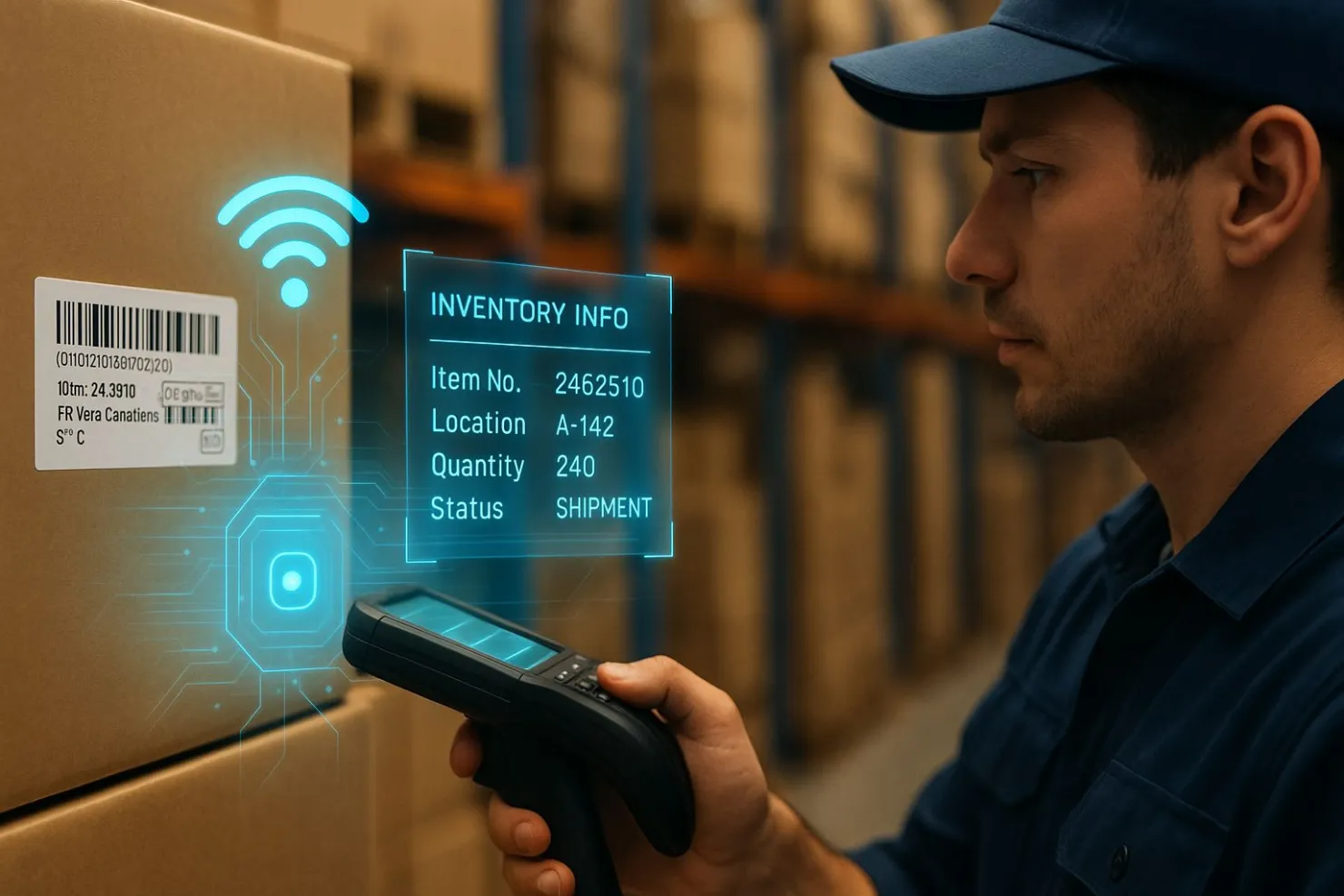
Brand protection also means safeguarding the product experience that customers expect. RFID labels, including NFC-based solutions, can be built into tamper-evident designs that register opening, removal, or interference. When packaging integrity is compromised, the tag state changes as well, creating a reliable digital signal for investigation.
This is particularly critical in sectors where integrity directly affects safety or performance - pharmaceuticals, retail distribution, manufacturing, and luxury products. RFID enables automated control across the supply chain, while NFC allows simple, immediate verification at the point of use, helping protect end users and support rapid investigation when packaging is compromised.
The future of brand protection starts with trusted identity
As counterfeiting grows more sophisticated and grey markets exploit gaps in visibility, brand protection must be item-level, real-time, and built to scale. RFID labels provide that secure foundation: each product becomes uniquely identifiable, instantly verifiable, fully traceable from source to sale, and protected with tamper-detection capabilities - while also driving stronger logistics performance and tighter RTI control.
Paragon ID delivers brand protection at scale with end-to-end RFID label manufacturing in-house. With 60 years of experience in label conversion and over 15 years' experience in RFID technology, Paragon ID controls every step - from inlay to printing and secure encoding - across UHF, HF and NFC labels and tags.
Sources
[1] IPO counterfeit goods research IPO counterfeit goods research - GOV.UK
[2] Report shows £500m in counterfeit goods intercepted at UK border Report shows £500m in counterfeit goods intercepted at UK border - GOV.UK
[3] RFID in brand protection: what you need to know about it? RFID In Brand Protection: What You Need To Know About It? - RFID Label
Anti-Counterfeiting: Using RFID and NFC to Protect Brands and Revenue
Anti-Counterfeiting: Using RFID and NFC to Protect Brands and Revenue
[4] RFiD Discovery transforms management of fish boxes in French harbours RFiD Discovery transforms management of fish boxes in French harbours