The true cost of losing a reusable transport item
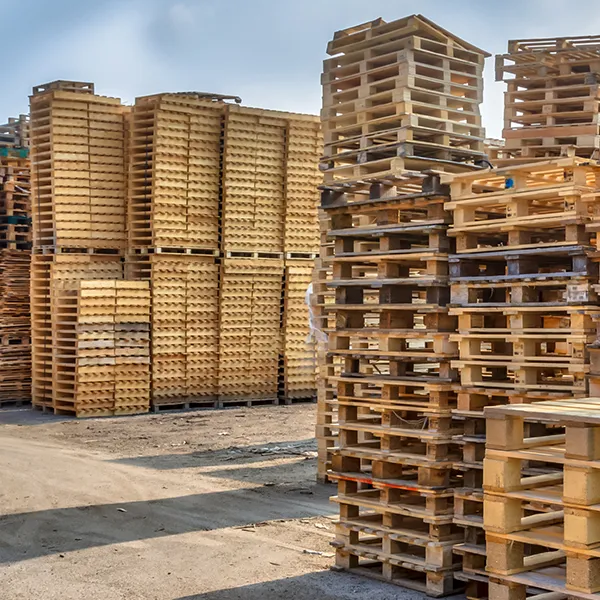
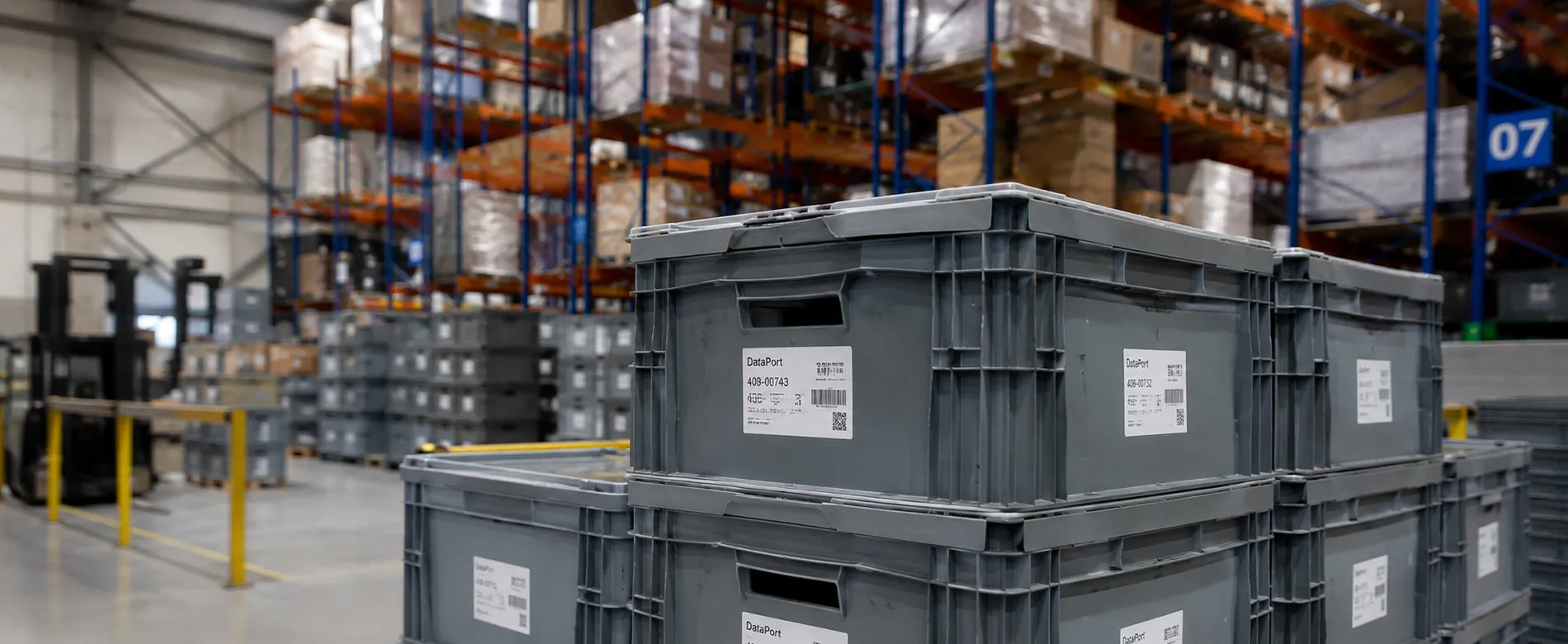
Reusable Transport Items (RTIs) – including crates, pallets, bins, trolleys and other reusable logistics assets – are essential to modern supply chains. They enable the efficient movement of goods, support operational continuity and help organisations reduce waste through reuse.
Yet when one of these assets goes missing, its impact is often underestimated. The replacement cost of a crate or pallet may seem insignificant compared to the value of the products it carries. However, focusing solely on replacement costs overlooks the wider operational and financial consequences.
The loss of an RTI generates both direct and indirect costs. Beyond replacing the asset, organisations may face reduced asset availability, lower asset utilisation, declining turnover rates, additional procurement costs, increased administrative workload and reduced visibility across the supply chain.
What are the costs associated with losing a reusable transport item?
The true cost of losing a reusable transport item extends far beyond its purchase price. It can affect:
- Asset availability and operational continuity;
- Asset turnover and utilisation rates;
- Inventory accuracy and asset visibility;
- Administrative and replacement costs;
- Supply chain efficiency and performance.
For organisations managing large fleets of reusable logistics assets, even a small percentage of losses can quickly translate into significant financial and operational consequences.
Beyond replacement costs
When a reusable crate, pallet or container is lost, the most visible consequence is the need to replace it. However, replacement costs are only part of the equation.
Each missing asset can also generate indirect costs, including:
- Time spent searching for missing assets;
- Inventory reconciliation activities;
- Unplanned procurement and replacement orders;
- Administrative management of discrepancies;
- Additional safety stock requirements.
Taken individually, these costs may appear manageable. Across hundreds or thousands of assets operating across multiple locations, they can become a major drain on resources.
Asset loss directly impacts availability
RTIs are designed to circulate continuously throughout the supply chain. Their value depends on their ability to complete multiple usage cycles efficiently.
When assets disappear from the network, circulation slows and availability decreases. Organisations are left with fewer assets to support the same operational requirements.
To compensate, businesses often need to:
- Increase their inventory of reusable assets;
- Purchase additional RTIs;
- Reallocate assets between sites;
- Adjust logistics processes to maintain service levels.
These actions increase costs while reducing operational efficiency.
The most expensive losses are often the invisible ones
For many organisations, the biggest challenge is not asset loss itself but the lack of visibility surrounding asset location and utilisation.
A missing RTI is not necessarily lost. It may be located at a supplier's site, a distribution centre, a logistics provider's facility, a retail location or a customer site.
Without reliable asset data, it becomes difficult to answer critical operational questions:
- Where are the assets currently located?
- How many assets are actually available?
- Which locations or partners retain assets the longest?
- Where are bottlenecks occurring within the return cycle?
- How efficiently are reusable assets being utilised?
This lack of visibility often results in unnecessary asset purchases while existing assets remain somewhere within the network.
A challenge across multiple industries
The effective management of RTIs has become a strategic priority across a wide range of industries.
Food retail
Reusable crates play a critical role in transporting fresh produce and perishable goods. High asset turnover is essential to maintain product availability and operational efficiency.
Logistics and distribution
Reusable containers and transport assets help streamline operations, reduce packaging waste and improve supply chain sustainability.
Manufacturing and industry
Reusable logistics assets often represent significant investments. Maintaining visibility and control over these assets is essential to support production continuity and operational performance.
Across all sectors, effective asset management directly influences supply chain efficiency, cost control and service quality.
Asset tracking and RTLS: transforming asset visibility
Advances in identification, traceability and location technologies are helping organisations transform the way they manage reusable logistics assets.
Asset Tracking, asset monitoring and Real-Time Location Systems (RTLS) provide real-time visibility into the location, status and utilisation of RTIs throughout their lifecycle.
By assigning a unique digital identity to each asset and monitoring its movements across the supply chain, organisations can:
- Reduce asset losses;
- Improve asset utilisation;
- Increase turnover rates;
- Minimise unnecessary replacement purchases;
- Strengthen inventory accuracy;
- Improve supply chain visibility;
- Generate actionable operational insights.
The objective is no longer simply to locate assets. It is to understand how assets move, how they are used and how they contribute to overall supply chain performance.
Conclusion
The loss of a reusable transport item is about far more than the cost of replacing a crate, pallet or container. It affects asset availability, asset utilisation, turnover rates, supply chain visibility and overall operational performance.
By implementing Asset Tracking, RTLS and real-time visibility solutions, organisations can gain greater control over their reusable logistics assets, reduce losses and optimise asset performance across the supply chain.
With its Asset Tracking and monitoring solutions, including XgenTag, its next-generation connected tag, Paragon ID helps organisations achieve real-time visibility of reusable logistics assets, improve operational efficiency and build more resilient supply chains.
Heading
Find out more about our Track & Trace solutions
Find out more
Frequently Asked Questions (FAQs)
A Reusable Transport Item (RTI) is a reusable logistics asset such as a crate, pallet, bin, trolley or container that is used repeatedly to transport, store or handle goods throughout the supply chain.
RTIs help reduce packaging costs, improve sustainability, increase operational efficiency and support the smooth movement of goods across logistics networks.
Businesses can reduce RTI losses through Asset Tracking, RTLS and traceability solutions that provide real-time visibility into asset location, movement and utilisation.
The true cost includes much more than replacing the asset. It can include reduced asset availability, lower utilisation rates, additional procurement costs, administrative expenses, inventory inaccuracies and operational disruption.
Asset Tracking and RTLS technologies provide real-time visibility into reusable logistics assets. This enables organisations to reduce losses, improve utilisation, optimise asset recovery and strengthen overall supply chain performance.